This week I decided to look around for environment artist show reels, as next week I plan to do a block out for my own, and I can get an idea of how long my show reel should be, if I should show many props, and if I should show breakdowns of created assets.
Ive noticed that on previous portfolios that people don't tend to use show reels, or they are just not on the front page. So I will try to find out why this is too.
Brent Waller
https://www.youtube.com/watch?v=ZMTHOZAYThI&feature=youtu.be
I liked this one because it shows many different types and styles of environments. You can tell that he is very experienced as he shows over 6 environments and they all are of good quality. He has also put in some environments from films which is interesting. There is a lot of content but it is kept short. (1.35)
Chris Green
https://www.youtube.com/watch?v=kTed8R-lV1U
This is a good example, as its by a student who just finished university when he put it up, and I will be in a similar situation at the end of the course. He just includes a fly through of a few different environments. They are all quite a similar style, and there are no breakdowns, but from the comments on the video it seems to have got him a job anyway.
It is again, a short video (1.21).
Dave Nolan
http://vimeo.com/42452601
This is another show reel from a student, it has lots of variety, and shows a few breakdowns and turntables. I think its another great example of a good show reel. Its a bit longer than the others (2.20)
So for my show reel, I want to keep it no longer than 3mins, I want to have a variety of environments to show I can do different themes, and I think I'm going to include some break downs of unique looking assets, like my fountain for my advanced 3d.
I'm going to include a bell prop I did too, but I'm unsure as to whether I should keep it, I will get some feed back on week 7, when we have our midterm reviews.
By looking around on 3D artist websites such as polycount, Ive found that the reason people don't usually use show reels is because stills of environments are seen as a better way for an employer to look at the fine details in your work.
User DWalker on polycount said,
"Keep in mind that, except for animators & f/x artists, the still
images in your gallery are far more important than your demo reel. I
know art schools still emphasize the demo reel, but it is far more
important for prospective employers to study your work in detail at
their leisure. Create a page for each project, and include both texture
sheets and wireframes." (DWalker, 2014)
I'm still going to include a show reel, but I'm not going to display it on the front page.
DWalker 2014. About to graduate here's my demo reel!, Forum post, Polycount. Accessed - 23/10/14
<http://www.polycount.com/forum/showthread.php?t=130725>
Sunday, 26 October 2014
Sunday, 19 October 2014
Week 4 - 13/10/14 - 19/10/14 Mock Interview
This week we did some mock interviews. The company we would be applying for was mind candy, and the game was Moshi Monsters.
We took turns being the interviewer and the interviewee, and had 3 different sets of questions to choose from. One person also took notes on how we were doing. There were about 5 - 6 questions on the papers we were given, but as the interviewer we were expected to add our own.
I was interviewed first, and most questions were general questions like, "Tell us about yourself", "What can you bring to the company?", and "What are your weaknesses?".
I found it difficult because I don't know anything about the company or the games they make, so It was hard to answer questions like "why do you want to work here?" and I ended up just giving a generals answers like "Because I love creating and playing games".
One question stood out, which was "If you were an animal what would you be?". While its a strange question I can kind of understand that something like this may pop up. Especially for a company which makes kids games, they would probaly want people working with them who have a more fun personality.
I didn't really know what animal I would be, and just said monkey because I can be energetic and active.
I still found the interview difficult, or even more difficult even though it was a mock one, I guess it was because I didn't know anything about the company and the fact that I probably wouldn't try to work for one like it.
As the interviewee, it was a lot more different, it felt like there was no pressure and you had a lot more power. I didn't really add any extra questions as I didn't know what to add, and the interview ended up being a lot more shorter than it should of been, but it was definitely interesting playing the part of the interviewee.
I had a look around at interview tips and found a good blog post on the subject, which went over many of the general interview questions and explained how to best go about answering them.
http://laidinpeace.blogspot.co.uk/p/game-job-interview-questions-and-how-to.html
I have took some quotes and made some bullet point dos and don't s from the blog, most are quite obvious but there are some good points.
Why do you want to work here?
"This question is an open opportunity to show you've done some research on the company where you're interviewing. All companies and interviewers are flattered when the interviewee knows who they are, knows what games they make, and wants to be a part of their experience. Do your homework and put on a good show! " (Sharad mitra 2010)
What will you bring to the team?
"Have some knowledge of how the company operates. Who does what? Your goal is to slot your experience, passion and skills (and if you are a student, your passion, skills, and desired career direction) into any holes the company may have -- and it should have some. Otherwise, why are they hiring?"
(Sharad mitra 2010)
What is your biggest weakness?
"What most employers are looking for is an honest answer that is followed up with an example of something you have done to work on your weakness. For example, you can say, "My workspace tends to become extremely disorganized," as long as you follow it up with, "but recently, I've put in a lot of effort to go paperless, and I'm extremely systematic in the way I manage my email inbox." " (Sharad mitra 2010)
Do you have any questions?
I found this one important as I didn't expect it for my interview at straw dog studios, and it was probably one of the reasons I didn't get a reply as It made me seem uninterested.
Here are some of the questions listed on the blog which are good to ask
"
Sharad mitra 2010, game job interview questions and how to answer them, TAD/Generalist/Manager/teacher, Viewed 18/10/14
<http://laidinpeace.blogspot.co.uk/p/game-job-interview-questions-and-how-to.html>
We took turns being the interviewer and the interviewee, and had 3 different sets of questions to choose from. One person also took notes on how we were doing. There were about 5 - 6 questions on the papers we were given, but as the interviewer we were expected to add our own.
I was interviewed first, and most questions were general questions like, "Tell us about yourself", "What can you bring to the company?", and "What are your weaknesses?".
I found it difficult because I don't know anything about the company or the games they make, so It was hard to answer questions like "why do you want to work here?" and I ended up just giving a generals answers like "Because I love creating and playing games".
One question stood out, which was "If you were an animal what would you be?". While its a strange question I can kind of understand that something like this may pop up. Especially for a company which makes kids games, they would probaly want people working with them who have a more fun personality.
I didn't really know what animal I would be, and just said monkey because I can be energetic and active.
I still found the interview difficult, or even more difficult even though it was a mock one, I guess it was because I didn't know anything about the company and the fact that I probably wouldn't try to work for one like it.
As the interviewee, it was a lot more different, it felt like there was no pressure and you had a lot more power. I didn't really add any extra questions as I didn't know what to add, and the interview ended up being a lot more shorter than it should of been, but it was definitely interesting playing the part of the interviewee.
I had a look around at interview tips and found a good blog post on the subject, which went over many of the general interview questions and explained how to best go about answering them.
http://laidinpeace.blogspot.co.uk/p/game-job-interview-questions-and-how-to.html
I have took some quotes and made some bullet point dos and don't s from the blog, most are quite obvious but there are some good points.
Why do you want to work here?
"This question is an open opportunity to show you've done some research on the company where you're interviewing. All companies and interviewers are flattered when the interviewee knows who they are, knows what games they make, and wants to be a part of their experience. Do your homework and put on a good show! " (Sharad mitra 2010)
- Don't say things like "I need a job"
- "I want to work on an FPS game" isnt that good an answer
- "I want to work on game franchise X because I played the first two games and still see potential growth of the product". Is a good answer because it shows you know about what the company does, and It can lead to further conversation.
What will you bring to the team?
"Have some knowledge of how the company operates. Who does what? Your goal is to slot your experience, passion and skills (and if you are a student, your passion, skills, and desired career direction) into any holes the company may have -- and it should have some. Otherwise, why are they hiring?"
(Sharad mitra 2010)
- Talk about previous experiences in groups and how they went.
- What your strengths are when working in a group
What is your biggest weakness?
"What most employers are looking for is an honest answer that is followed up with an example of something you have done to work on your weakness. For example, you can say, "My workspace tends to become extremely disorganized," as long as you follow it up with, "but recently, I've put in a lot of effort to go paperless, and I'm extremely systematic in the way I manage my email inbox." " (Sharad mitra 2010)
- Try not to be too negative
- Talk about how you are dealing with your weaknesses
Do you have any questions?
I found this one important as I didn't expect it for my interview at straw dog studios, and it was probably one of the reasons I didn't get a reply as It made me seem uninterested.
Here are some of the questions listed on the blog which are good to ask
"
- What are the core working hours?
- How do you assign or schedule tasks? Who gets to decide who does what and estimates time?
- What's the career path for this job? How do I get to progress? What is the process for promotion?
- What training approach do you use? How would I learn new skills?
- How are personnel reviews handled? Who does them and how often?
- Are there any specific development processes used here, for example, Scrum?
- Who would I report to?
- If I'm hired, what is the next game I might work on? How much input would I have on that?
- Is there a relocation package?
- What bonus structure or incentives are there? "
(Sharad mitra 2010)
(Sharad mitra 2010)
I will make sure I use some of these if I ever have another interview.
Sharad mitra 2010, game job interview questions and how to answer them, TAD/Generalist/Manager/teacher, Viewed 18/10/14
<http://laidinpeace.blogspot.co.uk/p/game-job-interview-questions-and-how-to.html>

Sunday, 12 October 2014
Week 3 - 6/10/14 - 12/10/14 UK games Industry
This week there was another group project set.
For this project, my team had to research the UK games industry, and its current status. Next week we must do a presentation on it.
I looked at some general information about the industry, and found out some interesting facts.
http://www.nesta.org.uk/publications/map-uk-games-industry
I also had to find out about indie studios in the UK for our presentation.
I looked at 3 studios.
Facepunch studios
This studio was created by Garry Newman, who had success beforehand in creating the game Garrys mod, which was a mod for the source-engine. The game is very popular, and has been used by the community to create even more small mods which have had equal success.
He then went on to create Facepunch studios, and started on a game called Rust. The game is still in alpha phase and has generated over $46.5 million.
One thing I noticed about applying for a job on there website was that they don't look for specific roles, they are just interested in anyone who they think could be a valuable asset to there team. They seem more laid back than larger studios, but still hard working and passionate.
I also like how they do a weekly update of what they have been working on, as the players can give feedback each week and say what they don't/do like.
They listen to the community and even do a weekly community update too.
Website : http://playrust.com/
I think there a great example of a good indie studio, or just a good studio in general.
I hope to be able to work for a studio like this when I finish my course.
Introversion Software
Introversion software are quite an old indie studio.
It was formed in 2001 by three friends while at university, they worked on 3 games from there bedrooms before moving into an office for there forth game, Multiwinia. Multiwinia and there next game DEFCON, both did well and received good reviews.
While there first game, Uplink, did well on sales, they blew all there money and were on the edge of bankruptcy.
Luckily they were able to release there next game Darwinia, on steam in 2005. Because steam is the biggest digital game distibutor, there game was able to get the advertising it needed and the company was back on its feet.
But by 2010 the company went downhill again, as they had just ported Darwinia to the XBOX 360 and it didn't do well in sales. The directors nearly face prosecution under the UK's insolvency law.
But yet again steam saved the company by having there games put on sale and giving the company enough to carry on.
Currently they are working on a game called Prison architect, which is currently in alpha and has made over $11 million.
I think this is a perfect example of the highs and lows of being indie, and shows how hard it sometimes be if your game only sells averagely.
Hello Games
Formed by developers from studios such as criterion games and EA games, there first game was a action side scroller called Joe danger.
It was released on the play station store as a downloadable title, it sold well and revived positive reviews. The company went on to create more Joe danger games which had equal success, and the team received many indie awards.
Currently they are working on a game called No man's sky, which is a game for next gen consoles. It was shown at E3 2014, and it received a massive amount of praise.
Here is the presentation.
For this project, my team had to research the UK games industry, and its current status. Next week we must do a presentation on it.
I looked at some general information about the industry, and found out some interesting facts.
- The UK games industry is the in Europe closely tied with germany, and the 5th biggest in the world
- The most popular platforms for games development are smartphone and tablet
- The industry is experiencing a growth of 22% more companies a year
- Most studios are based in London
- Majority of organizations are made up of 5 or less people
http://www.nesta.org.uk/publications/map-uk-games-industry
I also had to find out about indie studios in the UK for our presentation.
I looked at 3 studios.
Facepunch studios
This studio was created by Garry Newman, who had success beforehand in creating the game Garrys mod, which was a mod for the source-engine. The game is very popular, and has been used by the community to create even more small mods which have had equal success.
He then went on to create Facepunch studios, and started on a game called Rust. The game is still in alpha phase and has generated over $46.5 million.
One thing I noticed about applying for a job on there website was that they don't look for specific roles, they are just interested in anyone who they think could be a valuable asset to there team. They seem more laid back than larger studios, but still hard working and passionate.
I also like how they do a weekly update of what they have been working on, as the players can give feedback each week and say what they don't/do like.
They listen to the community and even do a weekly community update too.
Website : http://playrust.com/
I think there a great example of a good indie studio, or just a good studio in general.
I hope to be able to work for a studio like this when I finish my course.
Introversion Software
Introversion software are quite an old indie studio.
It was formed in 2001 by three friends while at university, they worked on 3 games from there bedrooms before moving into an office for there forth game, Multiwinia. Multiwinia and there next game DEFCON, both did well and received good reviews.
While there first game, Uplink, did well on sales, they blew all there money and were on the edge of bankruptcy.
Luckily they were able to release there next game Darwinia, on steam in 2005. Because steam is the biggest digital game distibutor, there game was able to get the advertising it needed and the company was back on its feet.
But by 2010 the company went downhill again, as they had just ported Darwinia to the XBOX 360 and it didn't do well in sales. The directors nearly face prosecution under the UK's insolvency law.
But yet again steam saved the company by having there games put on sale and giving the company enough to carry on.
Currently they are working on a game called Prison architect, which is currently in alpha and has made over $11 million.
I think this is a perfect example of the highs and lows of being indie, and shows how hard it sometimes be if your game only sells averagely.
Hello Games
Formed by developers from studios such as criterion games and EA games, there first game was a action side scroller called Joe danger.
It was released on the play station store as a downloadable title, it sold well and revived positive reviews. The company went on to create more Joe danger games which had equal success, and the team received many indie awards.
Currently they are working on a game called No man's sky, which is a game for next gen consoles. It was shown at E3 2014, and it received a massive amount of praise.
Here is the presentation.
Sunday, 5 October 2014
Week 2 - 29/10/14 - 05/10/14 Good and Bad Portfolios
This week I had to do a group project where my team and I had to find some good and bad portfolios and present them to the rest of the class. We then had to explain why we thought they were good or bad.
We chose these 5 as examples of good portfolios
This one is great because it shows all the work on the front page, with high quality large images without having to scroll down the page. Its just a really well laid out and as much space has been used as possible.
This one is for a 3D character modeler for film and animation, and has a showreel as there front page. This works well with the type of media she creates models for, as people would want to see how the characters/models look when they are moving, not static. There is also a nicely laid out gallery of work on another page.
This one is for an environment artist, and I think its good because its just large pictures of different environments and props, and when you click on them you are directed to another page with more and larger images.
This one is another environment/prop artist, and its really well made because its just full of images of his work. He has a large image showcasing environments, and small thumbnails of prop work. Its mostly just a large list of work so you dont have to go through clicking tons of pages.
This one is for a character artist, and we chose this one because its neatly presented and is easy to navigate. There are small portrait renders of characters, which when clicked will take you to more images and a breakdown of how it was made. He also includes lots of different art styles in his work.
Here are the 5 bad portfolios
This one has no work displayed on the front page, it doesn't use half the screen, and the images of work are tiny. its not well presented and doesn't look very professional.
This is from is by quite an experienced artist, but it has a really ugly background which is an eyesore. Also, when you first come onto the page you dont see any work unless you scroll down. 1/3 of the page is also unused.
This one has no work on the front page, and its not that well laid out. It seems like it was made quickly, and has both 2D and 3D work, but the 2D is very poor compared to the 3D.
This one is just cluttered with small images, and there are so many links its confusing to navigate.There is so much variation in work its hard to tell what he really does.
This one wasn't too bad, but he has just titled himself "3D artist" which is really general and has a mixture of work displayed. I think its better to specialize on one subject for a portfolio. The banners for the work are quite small too.
Other groups showed there choices and we discussed what makes a good portfolio and what makes a bad one.
One thing I need to add to mine is my name and email at the bottom of every render. This is so people can find me if my image is found somewhere other than my portfolio.
We chose these 5 as examples of good portfolios
This one is great because it shows all the work on the front page, with high quality large images without having to scroll down the page. Its just a really well laid out and as much space has been used as possible.
This one is for a 3D character modeler for film and animation, and has a showreel as there front page. This works well with the type of media she creates models for, as people would want to see how the characters/models look when they are moving, not static. There is also a nicely laid out gallery of work on another page.
This one is for an environment artist, and I think its good because its just large pictures of different environments and props, and when you click on them you are directed to another page with more and larger images.
This one is another environment/prop artist, and its really well made because its just full of images of his work. He has a large image showcasing environments, and small thumbnails of prop work. Its mostly just a large list of work so you dont have to go through clicking tons of pages.
This one is for a character artist, and we chose this one because its neatly presented and is easy to navigate. There are small portrait renders of characters, which when clicked will take you to more images and a breakdown of how it was made. He also includes lots of different art styles in his work.
Here are the 5 bad portfolios
This one has no work displayed on the front page, it doesn't use half the screen, and the images of work are tiny. its not well presented and doesn't look very professional.
This is from is by quite an experienced artist, but it has a really ugly background which is an eyesore. Also, when you first come onto the page you dont see any work unless you scroll down. 1/3 of the page is also unused.
This one has no work on the front page, and its not that well laid out. It seems like it was made quickly, and has both 2D and 3D work, but the 2D is very poor compared to the 3D.
This one is just cluttered with small images, and there are so many links its confusing to navigate.There is so much variation in work its hard to tell what he really does.
This one wasn't too bad, but he has just titled himself "3D artist" which is really general and has a mixture of work displayed. I think its better to specialize on one subject for a portfolio. The banners for the work are quite small too.
Other groups showed there choices and we discussed what makes a good portfolio and what makes a bad one.
One thing I need to add to mine is my name and email at the bottom of every render. This is so people can find me if my image is found somewhere other than my portfolio.
Sunday, 28 September 2014
Week 1 - 22/09/14 - 28/09/14 Previous Experience and Portfolios
I will first research other artists portfolios, so I can get a understanding of what a good portfolio will look like, and how to present my work. I will be mainly looking at environment artist portfolios, as that's the role I want to get into.
This weeks lesson we discussed getting into the games industry, and talked about job interviews and portfolios.
Interviews
We talked about what to expect at an interview, and how confidence and enthusiasm are important, and first impressions being crucial. We also discussed how sometimes a studio may have an art test, in which you are given a certain scene/prop to model, this is to see your workflow and well you can keep up with deadlines. I have been able to experience an interview first hand, and I think this will help me out with this module.
I went to an interview in may, for a potential placement at a small mobile game developer studio called "Strawdog", I used my blog as a portfolio, its not really a proper blog but more of a long list of pictures of all the work I have done. I like to use and update it as I can look back and see how Ive improved, it is also there in case a interviewer wants to see my previous work and how I have developed.
This is the blog I used - http://aaronedwards92.blogspot.co.uk/
This was my first interview at a studio or of any kind. Before I went for the interview, I did some research on the studio, as I thought knowing what kind of games they make would give me more to talk about, and how my skills could be useful to them. I was quite nervous, I knew being nervous wouldn't help at all, but I'm quite a shy person so It was hard to avoid.
I was interviewed by 2 people, we sat down and discussed my work. They used my blog on a
I-pad/tablet and I just told them what sort of work I liked doing, and previous projects I had done at College/Uni.
They seemed to like my hand painted/low poly work as this is the primary style used for 3D mobile games, and I knew they used this style for a few of there released games from researching them beforehand.
I talked about how I enjoyed doing different aspects of game design, and have even done a bit of programming for Unity and got a game onto mobile. I thought it would be relevant to talk about different skills I had, but I think I ended up focusing on that too much, as they were saying how they weren't looking for someone to cover lots of things, just someone to do 3D modelling. I think for future interviews I will just focus on talking about one skill, unless they want to know my other skills.
I didn't get the placement in the end, and they didn't get back to me so I was unsure about where exactly I went wrong, but I think it just was a bit of nervousness, and talking a bit to much about other skills.When asked if I had any questions, I couldn't think of any, which made me seem uninterested, so next time I will try to prepare some questions to ask.
It could have just been that they found someone better at the job, but I still think there are areas I could improve on, and I now know this for next time.
Portfolio
I wanted to start on my portfolio straight away, so I could get feedback and change it throughout the year.I first looked at other environment artists portfolios. I found most of the top searches on Google, as I assumed these would be popular sites and most likely be decent ones. I took a screenshot of the websites as soon as you open them and compared the results.
 |
| Friedrich Meinecke N.D |

Luke Adwick N.D

Steven Skidmore N.D

Clinton Crumper N.D

Christoffer Radsby N.D
All these websites are from different artists with different artistic styles, but there websites are all very similar.
- First of, they all have dark backgrounds, I assume this is because the background is not important and you want to draw the viewers eye to the screenshots of your work.
- The artists name is clearly displayed somewhere on the page, along with contact information nearby, on most websites.
- All of them have the there profession displayed near the name, in this case "Environment Artist".
- They all include finished high quality renders of environments/props, and professional work is clearly labeled.
- 3/5 include the title of the game or environment above the render, one of which being only visible when you hover over the picture.
- When you select a picture, directs you to a new page showing much larger renders of environments/props. Some of which have breakdowns of high poly meshes, polycount, and textures maps used.
Using this brief look into portfolio's, I have created my own. I have used some older work which I want to replace but its just there to add some content as I don't want an empty portfolio.
I used a free website hosting service called "Weebly". It was easy to use and I managed to create my portfolio in a day.
This is what my front page looks like as you first load the website. I thought the idea of having some text over the banner was a good choice because it lets the viewer know what they will be looking at if they choose to clink the link, and showing the game engine/program it was created in also shows them that you have experience with said game engine/program.


The two banners at the top show full environments, I have then placed a small separating line below the full environment banners, and added some other work I have done, like hand painted art, and some Z brush sculpts. I think this could potentially be a positive to have on my portfolio as it shows I enjoy doing different styles of art. All my environments with go at the top as I value these more importantly that small props, and its also what a hiring studio would want to see first if I were to apply for a environment artist position.
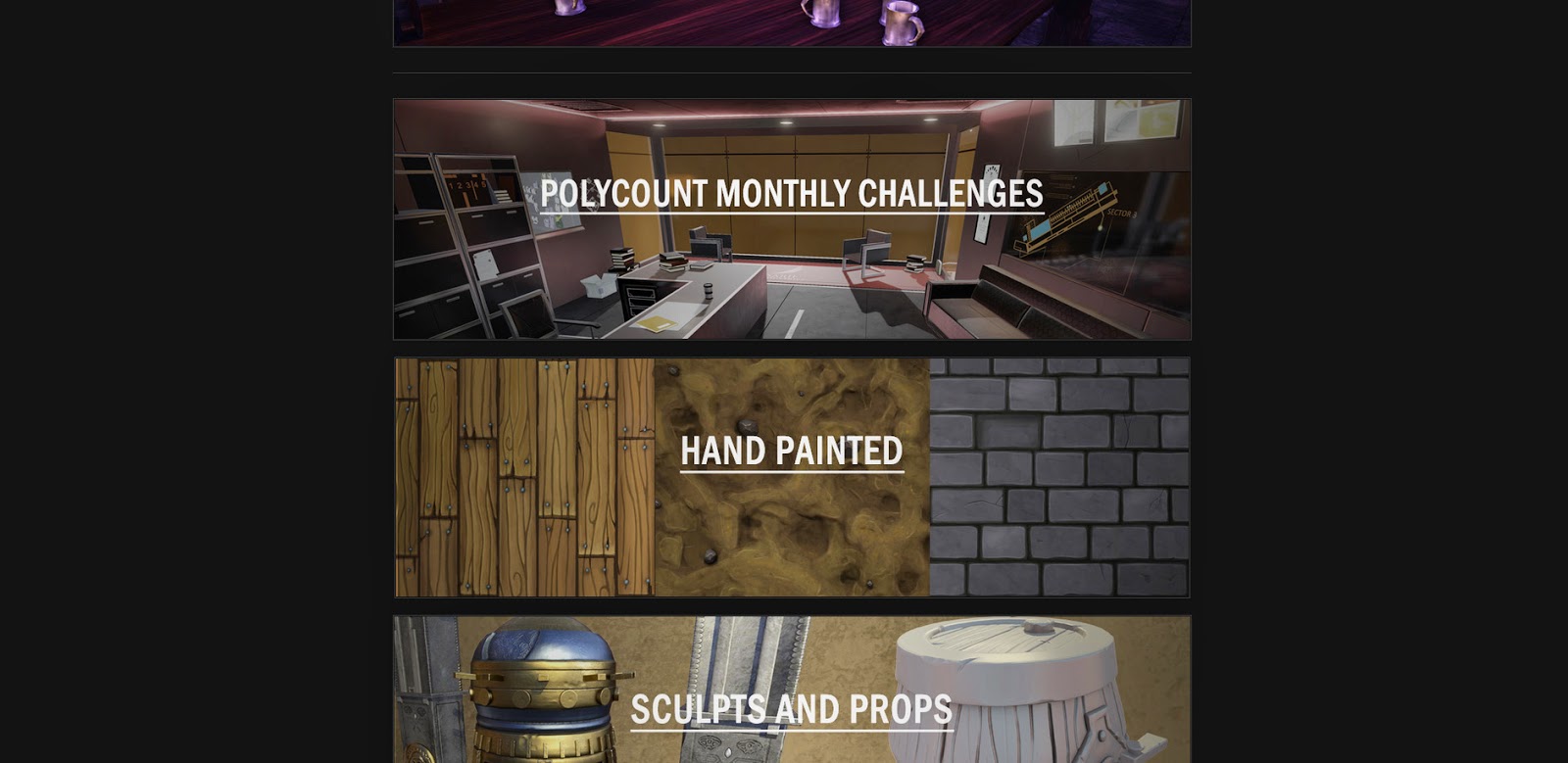
This was a very quickly made website and is probably no where near final. I decided to make this straight away based of the knowledge I already have, and to see how much my portfolio will change throughout this assignment.
Next week our class is to get into teams and pick out some different portfolios, then decided which are good and which are bad and why.
Bibliography
Friedrich Meinecke. N.D 3D Environment artist. [Online Portfolio] Available at: http://friedrichmeinecke.weebly.com/3d-art.html. [Accessed 25 September 2014].
Luke Adwick.. N.D Environment artist. [Online Portfolio] Available at: http://www.lukeadwick.co.uk/. [Accessed 25 September 2014].
Steven Skidmore. N.D Environment artist. [Online Portfolio] Available at:
http://stevenskidmore.com/ . [Accessed 25 September 2014].
Clinton Crumpler. N.D Environment artist. [Online Portfolio] Available at:
http://clintoncrumpler.com/ . [Accessed 25 September 2014].
Christoffer Radsby. N.D 3D Environment artist. [Online Portfolio] Available at:
http://christofferradsby.com/ . [Accessed 25 September 2014].
Steven Skidmore. N.D Environment artist. [Online Portfolio] Available at:
http://stevenskidmore.com/ . [Accessed 25 September 2014].
Clinton Crumpler. N.D Environment artist. [Online Portfolio] Available at:
http://clintoncrumpler.com/ . [Accessed 25 September 2014].
Christoffer Radsby. N.D 3D Environment artist. [Online Portfolio] Available at:
http://christofferradsby.com/ . [Accessed 25 September 2014].
Subscribe to:
Posts (Atom)